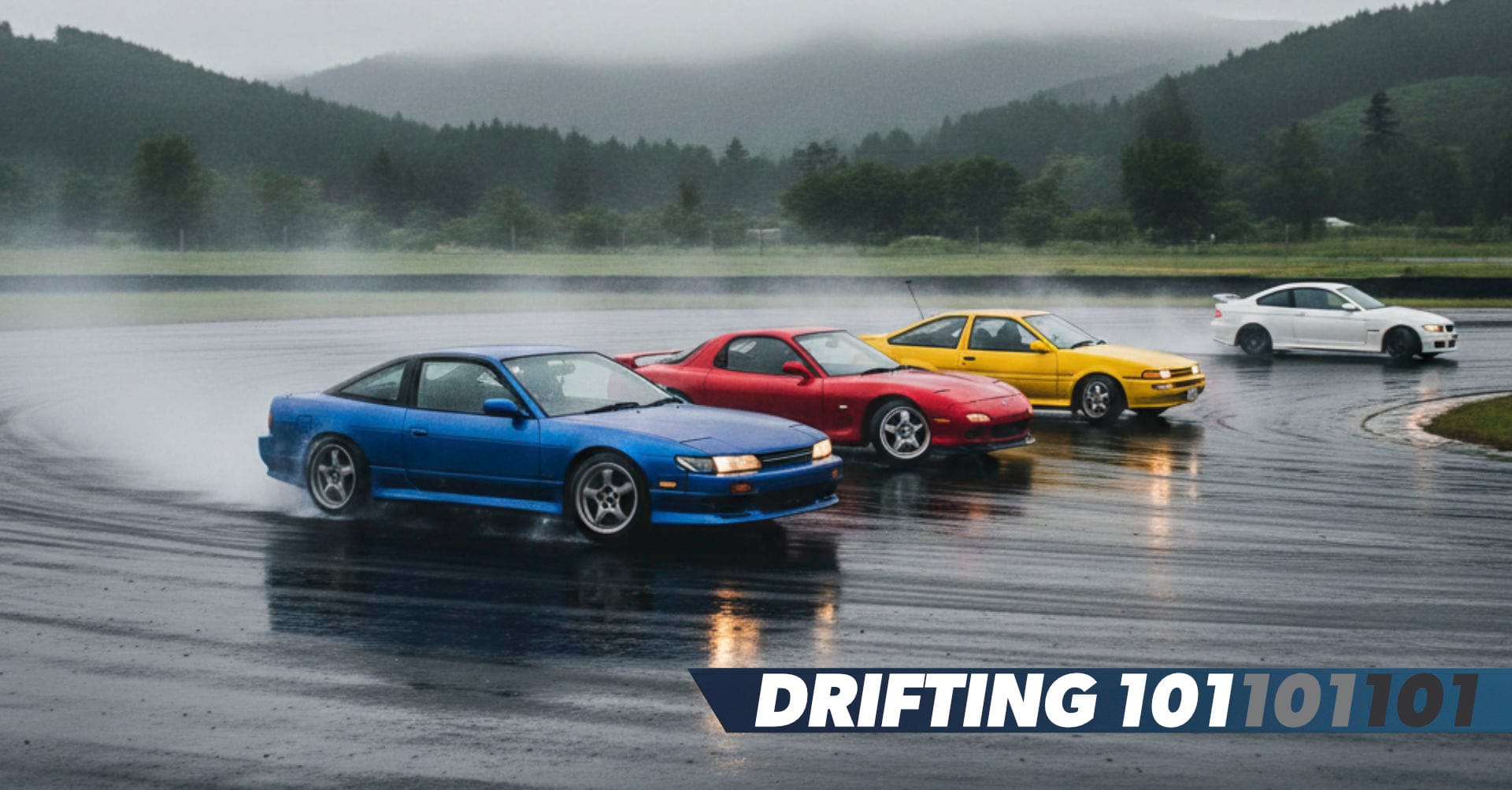
Drifting is one of the most exciting forms of motorsport, combining car control, precision, car preparation and plenty of tyre smoke. But if you’re thinking about getting into drifting for the first time, one of the biggest questions is: how much does it actually cost to get started?
The good news is that you don’t need a $50,000 competition car or a highly modified turbocharged engine to begin learning how to drift. With the right approach, you can get involved in drifting on a realistic budget, develop your skills and build your car over time.
In this guide, we’ll break down the costs of starting drifting in Australia, including buying a car, preparing it for the track, tyres, fuel, safety equipment and event entry fees.
1. How much do you need to get started?
Your budget will depend on whether you want to experience drifting for the first time, build your own car or work towards competitive drifting.
Here are some rough dollar estimates to help you plan.
| Getting started | Estimated budget |
|---|---|
| Professional drift experience passenger lap | $90-$120+ |
| Wetpan day in a suitable car you already own | $130–$180+ |
| Buying and preparing a basic drift car | $1,500–$15,000+ |
| Building a more developed drift car | $20,000–$40,000+ |
| Building a dedicated competition car | $50,000–$100,000+ |
These figures are indicative rather than fixed prices. Your costs will vary depending on the car, its condition, the modifications required, the event you attend and how much work you can do yourself.
The important thing to remember is that buying a drift car is only the beginning. You also need to budget for the ongoing costs of driving it.
2. Choosing your first drift car
Your choice of car will have one of the biggest impacts on your overall budget.
A common mistake is spending the entire budget on the car itself, leaving little money for repairs, tyres and track time.
For a beginner, a simple, reliable rear-wheel-drive car is often a better choice than an expensive, high-powered build.
Some popular options in Australia include:
- Ford Falcon: A practical choice, with strong engine options and a large supply of used parts.
- BMW E36 or E46: Popular platforms with a good balance of handling, aftermarket support and engine options.
- Mazda MX-5: A lightweight option that can teach you plenty about momentum, weight transfer and throttle control.
- Nissan Silvia or 180SX: Iconic drift platforms with strong aftermarket support, although prices for desirable examples can be considerably higher.
- Nissan 350Z: A capable rear-wheel-drive platform with a naturally aspirated V6 and good potential for a dedicated drift build.
The best choice isn’t necessarily the car with the most power. It’s the one you can afford to maintain and repair while still having money left to drive it.
Before buying anything, inspect the chassis for rust or accident damage and check the engine, cooling system, gearbox, differential and suspension. A cheap car that needs extensive repairs can quickly become more expensive than a well-maintained example.
3. Preparing your car for drifting
Once you’ve purchased a car, you’ll need to make sure it’s mechanically sound and meets the requirements of the events you plan to attend.
You don’t need every modification available on the market. Focus on reliability, safety and the basics first.
Differential
The differential is one of the most important parts of a drift car. A suitable limited-slip differential or other approved setup helps the rear wheels deliver predictable traction when initiating and maintaining a slide.
The cost will depend on the car and whether you choose a second-hand unit, a rebuilt differential or a new performance unit.
Suspension and steering
Good suspension helps you understand how the car behaves during transitions and changes in grip.
You can start with a healthy factory suspension setup if it is suitable for the event. Quality coilovers, adjustable arms and steering-angle modifications can come later as your skills develop and your requirements change.
Don’t assume that an expensive angle kit or a full set of adjustable suspension components is essential for your first day.
Cooling and reliability
Drifting places considerable demands on an engine and cooling system. Sustained high engine speeds, low vehicle speeds and repeated acceleration can expose problems that might not appear during normal road driving.
Before spending money on power upgrades, make sure the car has:
- A healthy cooling system and radiator.
- No engine oil, coolant or power-steering leaks.
- Reliable brakes and suitable brake fluid.
- A clutch and gearbox in good working condition.
- Sound suspension, steering and wheel bearings.
- Secure battery mounting and properly secured components.
Preventative maintenance is usually cheaper than missing an event because something has failed.
Safety equipment
Safety requirements vary between venues, event types and competition categories. Depending on where and how you intend to drive, you may need approved helmets, suitable clothing, a motorsport licence and additional vehicle safety equipment.
Some events require specific seat, harness or roll-cage configurations, while beginner-focused skid-pan sessions may have different vehicle requirements.
Always check the event’s current regulations before purchasing safety equipment or modifying your car. A modification that works for one type of event may not meet the requirements of another.
4. The cost of tyres
One of the biggest advantages of starting your drifting journey at a wet skid pan is the reduced tyre wear compared to traditional dry-surface drifting.
Wetpan events use water to reduce tyre grip, allowing drivers to slide the car at lower speeds and with less power. This makes them an excellent option for beginners who want to learn car control without burning through tyres every session.
While tyre wear is generally much lower on a wet pan, it isn’t completely eliminated. Wear will still depend on your car’s setup, tyre condition, driving style and how much seat time you get.
To keep your costs down:
- Start with suitable tyres. You don’t need expensive performance tyres to learn the basics.
- Check your tyre condition. Make sure your tyres are safe, roadworthy and meet the event’s requirements.
- Focus on technique. Learning smooth throttle control, steering and weight transfer will help you develop your skills without relying on excessive wheelspin.
- Make the most of your seat time. A wet pan gives you an opportunity to practise repeatedly while keeping running costs more manageable.
Another benefit is that a wet pan can be suitable for a wider range of vehicles, including lower-powered cars that might struggle to maintain a drift on a dry circuit.
For anyone starting out, a wetpan event is a great way to build confidence, learn the fundamentals and discover what your car can do before investing in expensive modifications or a dedicated drift car.
Less tyre wear, lower power requirements and plenty of seat time make wetpan drifting one of the most accessible ways to get started in motorsport.
5. How much does a drift day cost?
Your event entry fee is only one part of the cost of a day at the track.
For example, Australian Drift Club’s Sydney Motorsport Park Drift Days on 14 November 2026 list driver entries at $180 for either the morning or afternoon session. This is a useful example of an accessible way to get track time without committing to a full competition build.
You can view the event details here:
https://www.australiandriftclub.com.au/events/19-april-2026-smsp-drift-days-2/
When planning your budget, allow for the following expenses.
| Expense | Indicative budget |
|---|---|
| Driver entry | $130–$180+ |
| Fuel for the drift car | $50–$150+ |
| Tyres | $50–$250+ |
| Food, drinks and miscellaneous supplies | $20–$50 |
| Repairs and maintenance allowance | $50–$150+ |
| Transport, if required | Varies |
These are planning estimates, not fixed prices. Your actual spending may be higher or lower depending on the event, the vehicle and the amount of track time you get.
For a basic local event in a car you already own, budgeting around $350–$800 or more for the day is a sensible starting point. If you need to hire a trailer, travel a long distance, replace several tyres or repair a broken component, the total can increase considerably.
It’s also worth remembering that one event may be much cheaper than another. A beginner skid-pan session, an open practice day and a full competition weekend have different costs and demands.
6. Don’t forget your motorsport licence
Before entering an event, check whether you need a current motorsport licence and what type is accepted by the organiser.
Australian Drift Club’s Drift Days require drivers to hold a valid motorsport licence. Licence types, eligibility and application costs depend on the relevant motorsport authority and the event regulations.
Allow for the licence fee, any applicable club membership and the time needed to complete the application process.
You should also confirm the required helmet standards, clothing and other safety equipment before attending. Buying equipment that doesn’t meet the event requirements can add unnecessary costs to your first day.
7. What do you want to get out of drifting?
Before spending money on a drift car, it’s worth thinking about what you want from the sport and how you want to get involved.
Are you looking for a fun weekend hobby, a new motorsport challenge, a place to learn car control, or do you have your sights set on competing one day? Your goals will help determine how much you need to spend and what type of setup is right for you.
Option one: Start with the basics
If you’re new to drifting and want to learn the fundamentals, a beginner-friendly wet skid pan event is an excellent place to start.
Wetpan drifting allows you to practise throttle control, steering, weight transfer and car balance in a controlled environment. With lower grip levels, you can learn how the car behaves at lower speeds without needing a high-powered drift build.
It’s also a great way to find out whether drifting is for you before committing to the cost of buying and building a dedicated car.
Option two: Build towards competition
If your goal is to compete, you can develop your car and skills over time.
Start by researching the regulations for the competition level you want to enter, then plan your build around those requirements. This can help you avoid spending money on modifications that you’ll eventually need to replace.
You’ll also need to consider the ongoing costs of tyres, spare parts, transport, event entries and maintenance.
Find your place in the sport
There’s no single right way to get into drifting. Some drivers enjoy occasional skid-pan sessions, others spend their weekends at drift days, and some work towards competing at a state or national level.
The important thing is to start at a level that suits your experience and budget, then build from there.
Australian Drift Club runs events for drivers at different stages of their journey, from beginner-friendly wet skid-pan sessions to circuit drifting and competitive events.
Explore upcoming events and find a session that suits you:
https://www.australiandriftclub.com.au/events-list/
You don’t need to build the ultimate drift car before you start. Get some seat time, learn the fundamentals and work out what you want from the sport before investing more money into your setup.
8. How to save money when starting drifting
You don’t have to build the ultimate drift car straight away. In fact, keeping your first build simple can make the experience more enjoyable.
Here are some ways to get more value from your budget.
Buy condition, not just a badge. A mechanically sound, affordable car is often a better starting point than a desirable model with expensive problems.
Prioritise reliability. Cooling, brakes, steering and suspension should be sorted before chasing extra power.
Learn before modifying. Spend time understanding the car’s behaviour before buying expensive steering kits, engine upgrades or suspension components.
Do your own maintenance where appropriate. Basic servicing and straightforward repairs can reduce costs, provided you have the right tools, knowledge and safety practices.
Budget for seat time. Money spent driving and learning is often more valuable early on than money spent chasing extra horsepower.
Keep an emergency fund. A spare amount for unexpected repairs can be the difference between continuing your season and putting the car away for months.
Choose events that suit your experience. A beginner-focused session can offer a better learning environment than jumping straight into a high-speed circuit event.
9. What about competition drifting?
If your goal is to eventually compete, you can build towards that over time.
Competition drifting introduces additional requirements, which may include a suitable roll cage, approved seat and harness, fire safety equipment, technical inspection, specific tyres and other regulations depending on the competition level.
You may also need additional wheels and tyres, spare parts, vehicle transport, accommodation and entry fees across a season.
A competitive car can cost tens of thousands of dollars to build, with high-level builds reaching $50,000–$100,000 or more. However, you don’t need to spend that kind of money to start learning or enjoy grassroots drifting.
If competition is your long-term goal, research the regulations for your intended series before beginning a build. Planning around the correct specifications from the outset can prevent expensive rework later.
10. Is drifting worth the cost?
Like any motorsport, drifting has ongoing expenses. Tyres wear out, parts break and there will always be another modification you want to make.
But the cost doesn’t have to be overwhelming if you approach it sensibly.
Start with a realistic budget, choose a car you can afford to maintain and focus on improving your skills. You can build the car gradually as your experience grows, rather than trying to complete an expensive build before you’ve even attended your first event.
One of the best parts of grassroots drifting is the community. Drivers regularly share advice, help each other with repairs and offer recommendations on parts and setups. Getting involved with your local drift scene can help you avoid costly mistakes and make the most of every event.
Ready to get started?
You don’t need a professional competition car to experience the excitement of drifting. Whether you’re completely new to motorsport or already have a rear-wheel-drive car sitting in the garage, there are ways to get involved without spending a fortune.
Australian Drift Club provides opportunities for beginners and experienced drivers to enjoy drifting in a controlled, professionally supervised environment at Sydney Motorsport Park and Sydney Dragway.
Check out our upcoming events, find a session that suits your experience and budget, and start building your skills one lap at a time.
Visit https://www.australiandriftclub.com.au/events-list/ to explore upcoming events and take your first step into drifting.