
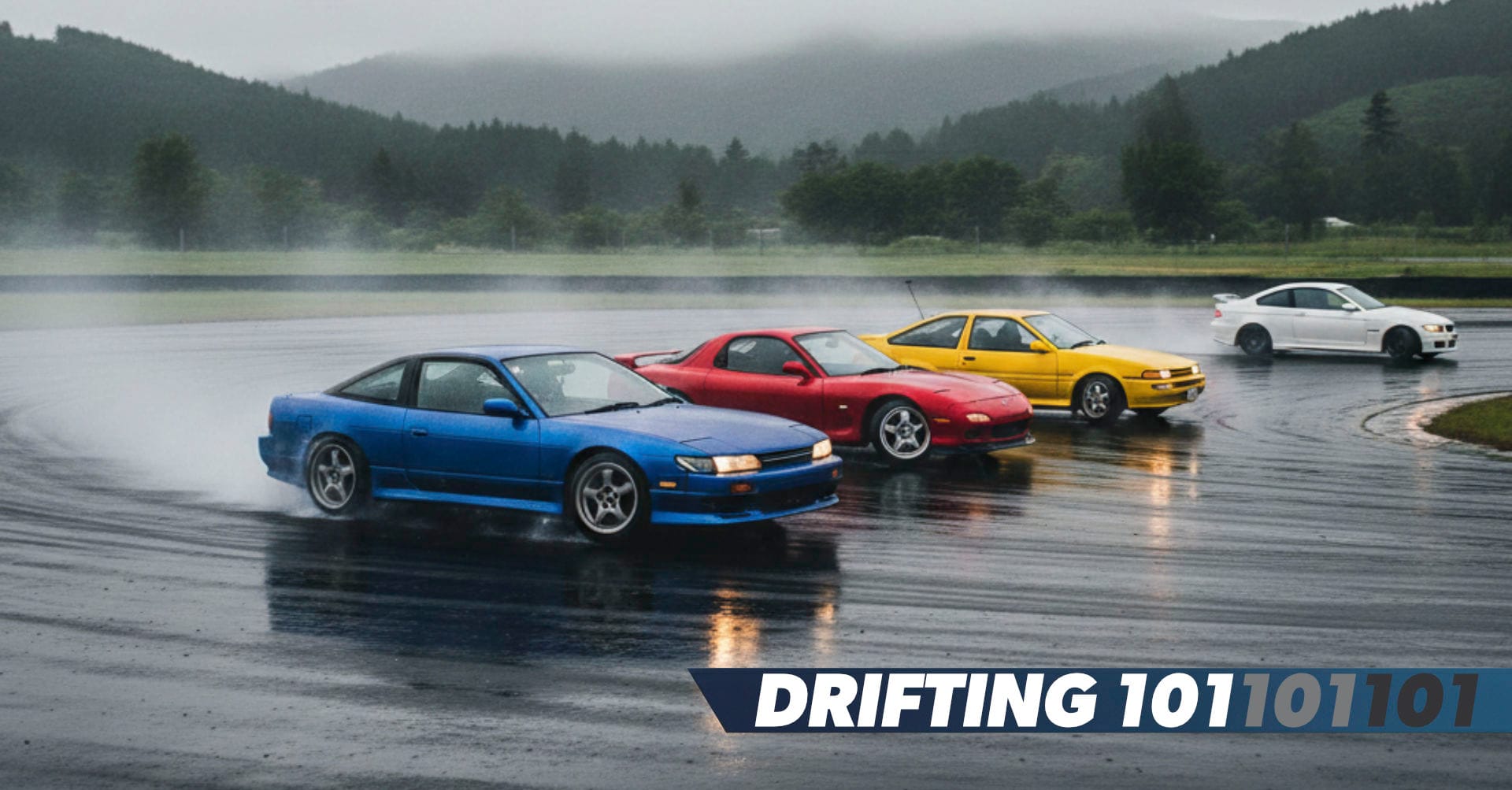
For many drivers in New South Wales, the journey into drifting starts on a wet surface. It’s controlled, forgiving, and designed to build skill safely. But at some point, every driver asks the question:
When is it time to step up to dry track drifting?
Understanding the progression — from wet skid pan to full dry layouts — is key to improving safely, managing costs, and protecting your car.
Starting Out: Sydney Motorsport Park Wet Skid Pan
The wet skid pan at Sydney Motorsport Park is where most drivers begin their drifting journey.
Why Start Here?
Low grip surface
Reduced tyre wear
Lower speeds
Controlled environment
The constant water coverage dramatically reduces grip levels. This allows drivers to initiate and hold a drift at much lower speeds and with significantly less power.
What You Learn
Throttle control
Countersteer technique
Weight transfer
Understanding oversteer
Because the surface is slippery, mistakes happen slower and are easier to catch. It’s the perfect environment to develop muscle memory without putting excessive stress on tyres, driveline, or engine components.
Tyre wear: Minimal
Grip level: Very low
Speed: Low to moderate
If you’re still working on consistent donuts, figure 8s, and linking small transitions — check out our Beginner Drift events. Mastery in the wet builds confidence for everything that follows.
The Next Step: Sydney Dragway Wetpan
The Sydney Dragway Wetpan is the natural progression after SMSP.
While it’s still a wet surface, it introduces:
More grip
More speed
More layout variation
What Changes Here?
The surface is still wet, but has higher grip and the need for:
Higher reaction time
Managing momentum
Carrying angle through transitions
Higher horsepower to link corners
Drivers begin to understand how small throttle changes affect the car mid-transition. You’ll also start to feel how suspension setup influences weight shift and stability.
Tyre wear: Moderate
Grip level: Low
Speed: Moderate
If you can confidently link sections on the Wetpan and recover from small mistakes without spinning, you’re progressing well.
Stepping Into Dry: Figure 8 & Drift Arena
The move to dry track drifting — whether it’s a dry Figure 8 or the Drift Arena — is a major step.
There is no water reducing grip.
Everything changes.
Grip Levels
Dry asphalt dramatically increases traction. That means:
Faster entries
Harder initiations
More commitment
More load on tyres and drivetrain
The car will react quicker and more aggressively. Mistakes happen faster. Corrections must be sharper and more precise.
Car Behaviour Differences
On wet surfaces:
The car slides easily
Throttle inputs can be exaggerated
Low power cars perform well
On dry surfaces:
You must break traction intentionally
Initiation technique matters more (clutch kick, feint, handbrake)
Power and torque become more important
Suspension setup becomes critical
Drivers often discover that techniques that “worked” in the wet don’t automatically transfer to dry conditions.
Tyre Wear: The Biggest Reality Check
One of the most noticeable differences when moving to dry drifting is tyre wear.
SMSP Wet Skid Pan:
Tyres can last multiple events
Heat build-up is minimal
Dragway Wetpan:
Increased tyre wear
- More grip than the SMSP Skid Pan
Still manageable costs
- Suspension setup and tyre pressure tuning start to matter
Figure 8 / Drift Arena:
Significant tyre wear
Rear tyres can last only a few sessions
Engine heat management becomes a factor
Tyre pressure tuning becomes important
- Post event fuild change recommended
Dry drifting generates higher temperatures, more friction, and faster degradation. Budgeting for tyres becomes part of the sport.
So… When Are You Ready for Dry?
You’re likely ready to progress when:
✔ You can link corners consistently in the wet
✔ You understand throttle modulation
✔ You rarely spin unintentionally
✔ You can control entry speed confidently
✔ Your car is mechanically reliable
It’s not about ego — it’s about control.
Drivers who rush into dry drifting without consistency often:
Spin frequently
Overheat tyres
Break components
Get frustrated
Drivers who build properly through the wet stages transition smoother and progress faster long-term.
The Smart Progression Path
SMSP Wet Skid Pan — Learn control
Sydney Dragway Wetpan — Build flow
Dry Figure 8 — Introduce real grip
Drift Arena — Commit to full layout drifting
Each stage develops a different skill set. Skipping steps may feel exciting, but mastering fundamentals always produces better drivers.
Final Thoughts
Dry track drifting is exciting, faster, louder, and more demanding. But the foundation is built in the wet.
Respect the progression.
Build the skill.
Then commit to the dry with confidence.
The drivers who take their time in the early stages often become the smoothest, most consistent — and most respected — drivers on track.

